
iTnews
  • Home
  • News
  • Technology
  • Software

Pac-Man reveals human response to threats

By Staff Writers
Aug 28 2007 8:16AM
Follow google news

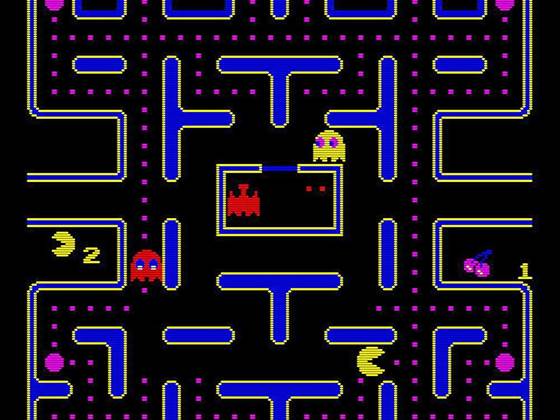
Scientists at University College London have used the classic Pac-Man arcade game to determine how the human brain responds to threats.

Pac-Man reveals human response to threats
The researchers created a game where volunteers were chased through a maze by an artificial predator. If the participants were caught they received a mild electric shock.

The volunteers' brain activity was measured using functional magnetic resonance imaging.

The research found that humans, like other animals, alter their behaviour when faced with a threat depending on whether the threat is close or distant.

This is because different defence mechanisms are needed depending on whether simply being aware of the threat might be enough to protect ourselves, or whether we might need to fight or run away.

"Without fear, animals would not react to threats. This would be a poor survival strategy and make it more likely that the animal would be eaten and not pass on its genes," said Dr Dean Mobbs, the lead author of the study.

"The most efficient survival strategy will depend on the level of threat we perceive. This makes sense, as sometimes being merely wary of a threat is enough, but at other times we need to react quickly.

"The closer a threat gets, the more impulsive your response will be - in effect, the less free will you will have."

The results of the Pac-Man experiment show that the fear response moves from the strategic areas of the brain towards more reactive responses as the artificial predator approaches.

When the artificial predator was in the distance, the researchers observed activity in lower parts of the prefrontal cortex just behind the eyebrows.

Activity in this area, known as the ventromedial prefrontal cortex, increases during anxiety and helps control strategies on how to respond to a threat.

However, as the predator moved closer, the brain activity shifted to a region of the brain responsible for more primitive behaviour, namely the periaqueductal grey.

This area is associated with quick-response survival mechanisms, which include fight, flight and freezing. This region is also associated with the body's natural pain killer, opioid analgesia, preparing the body to react to pain.

Although this natural defence mechanism is beneficial in evolutionary terms, Dr Mobbs believes that malfunctions in the system might help explain why some people suffer from anxiety disorders and panic attacks.

"When our defence mechanisms malfunction, this may result in an over-exaggeration of the threat, leading to increased anxiety and, in extreme cases, panic," he said.

"Although brain-imaging studies like ours cannot directly help to cure such disorders, they do improve our understanding of how the emotional system operates. This is the first step to helping people with anxiety-related disorders."

Add iTnews as your trusted source

Add iTnews As Your Trusted Source Add iTnews As Your Trusted Source
Got a news tip for our journalists? Share it with us anonymously here.
Copyright ©v3.co.uk
Tags:
humanresponserevealssoftwarethreatsto

Related Articles

  • Perth Airport to deploy 70 IT, OT systems for new terminal Perth Airport to deploy 70 IT, OT systems for new terminal
  • Apple rolls out new, AI-powered Siri Apple rolls out new, AI-powered Siri
  • iTnews State of Data & AI Breakfast comes to Sydney this July iTnews State of Data & AI Breakfast comes to Sydney this July
  • Defence says Palantir is "sandboxed" in its environment Defence says Palantir is "sandboxed" in its environment
Join our WhatsApp Channel

Partner Content

You meet the security standard. Shame no one can see it
Promoted Content You meet the security standard. Shame no one can see it
AI is delivering business value today
Partner Content AI is delivering business value today
The hidden economics of AI: Why token usage matters more than you think
Partner Content The hidden economics of AI: Why token usage matters more than you think
Agile isn’t the problem: why projects still fail, and what’s missing
Partner Content Agile isn’t the problem: why projects still fail, and what’s missing

Sponsored Whitepapers

Agile in the AI Era: why projects still fail
When Technology Becomes the Blocker: Unlocking Real Outcomes from AI and Cloud
High-volume data sources for AI-driven security analytics
How healthcare organisations can get more value from cloud
1 in 3 companies lose SaaS data. Here’s how to prevent it

Events

  • iTnews State of Security Breakfast iTnews State of Security Breakfast

  • iTnews State of Data & AI Breakfast iTnews State of Data & AI Breakfast

  • The 2026 iAwards The 2026 iAwards
  • Integrate 2026 Integrate 2026
  • Security Exhibition & Conference Security Exhibition & Conference
Share on Facebook Share on LinkedIn Share on Whatsapp Email A Friend

Most Read Articles

Defence says Palantir is "sandboxed" in its environment

Defence says Palantir is "sandboxed" in its environment

Services Australia describes fraud, debt-related machine learning use cases

Services Australia describes fraud, debt-related machine learning use cases

Meet Genie, Deakin Uni's virtual assistant for students

Meet Genie, Deakin Uni's virtual assistant for students

Apple rolls out new, AI-powered Siri

Apple rolls out new, AI-powered Siri

techpartner.news logo
Sydney-based AI-cloud waste startup raises $3m
Brennan uses NiCE to modernise its contact centre
Impact Awards: Tecala slashes customer response times for fintech IQumulate
Interactive introduces private cloud platform
Digital61 expands cybersecurity portfolio
All rights reserved. This material may not be published, broadcast, rewritten or redistributed in any form without prior authorisation.
Your use of this website constitutes acceptance of nextmedia's Privacy Policy and Terms & Conditions.